
Commercial and industrial projects across Brisbane are using artificial green walls more often.
For us trade painters, this changes how walls are finished, sequenced, and detailed.
Paint still does the heavy lifting on most projects, but it now shares space with panel systems that cover large wall areas and draw attention. When paint and green walls are planned together, the result looks deliberate and holds up longer. When they are not, the join between the two becomes the weak point.
This article looks at how to match your paint work with artificial green walls so the finish works as a whole, not as separate elements forced together late in the job.
Why green walls affect paint decisions
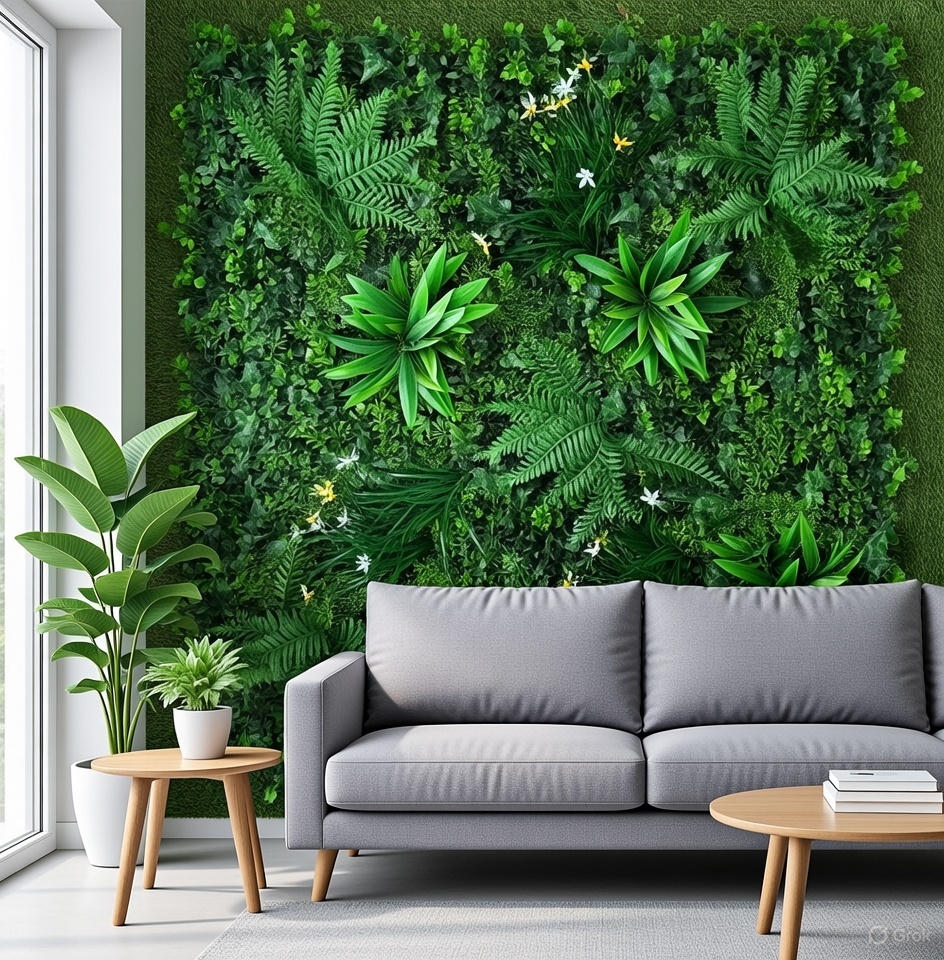
Artificial green walls usually replace painted feature walls. That means paint is no longer the hero finish in those locations. Instead, paint becomes the supporting element that frames, protects, and ties the wall into the rest of the space.
On commercial jobs, green wall panels often go into reception areas, retail back walls, meeting rooms, and client-facing zones in warehouses or showrooms. These are high-visibility areas. Any mismatch in colour, sheen, edge quality, or surface prep stands out fast.
Painters who treat these walls as standard paint areas often run into issues. The panels hide parts of the wall but highlight the edges. That makes cut lines, surface flatness, and colour choice more important, not less.
Start with the panel, not the paint
When artificial green walls are part of the scope, paint decisions should start with the panel selection. The colour, density, and tone of the greenery will influence what works around it.
Most artificial green walls sit somewhere between mid and dark green, often with mixed tones. High-contrast paint colours can look harsh against this. Very bright whites tend to pull attention away from the greenery. Dark feature colours can make the wall feel heavy if the space is already enclosed.
Neutral colours usually work best. Soft whites, warm greys, and muted concrete tones let the greenery read clearly without fighting it. In industrial spaces, low-sheen greys or off-whites often suit both painted blockwork and green panels.
Before locking in paint colours, ask to see the actual panel. Screens and sample cards are not reliable. Panels look different under site lighting, especially in warehouses and offices with mixed light temperatures.
Sheen levels matter more than usual
Sheen choice becomes more noticeable when paint sits next to textured greenery. High-gloss or semi-gloss finishes tend to reflect light unevenly beside green panels. This draws attention to the painted surface and away from the wall feature.
Low-sheen or matte finishes usually sit better alongside artificial greenery. They reduce glare and help painted surfaces recede. This keeps the focus on the wall as a whole rather than the paint film itself.
In industrial environments, durability still matters. You may need washable low-sheen or specialised coatings rather than full matte. The goal is to balance toughness with visual restraint.
Edge detailing is where jobs succeed or fail
The junction between paint and artificial green walls is critical. Poor edge work makes even good paint and good panels look cheap.
Straight, clean edges are essential. This often means extra time on masking or coordination with the panel installer. Do not assume the installer will hide uneven paint lines. Most panel systems have visible edges or trims that sit flush to the wall.
Paint should be finished before panel installation wherever possible. This allows proper cutting in and avoids rushed touch-ups around fixed panels. If panels must be installed first, protect them properly before painting. Paint on foliage looks unprofessional and is hard to remove.
Corners and returns deserve attention. Where green walls stop short of a corner, the adjacent painted return should be square and flat. Any bowing or surface defects become obvious when framed by a rigid panel edge.
Surface prep still counts
A common mistake is cutting corners on prep because the wall will be covered. This causes problems later.
Artificial green walls are fixed to the wall. If the substrate is dusty, chalky, or unstable, fixings can fail. Moisture issues behind panels can also cause odours or damage over time.
Walls should be sealed and sound before panels go on. In commercial and industrial settings, this often means proper sealing of blockwork or plasterboard, even if it will not be visible.
Painters are often the last trade to touch these walls before installation. That makes surface condition part of your responsibility, even if the finish is hidden.
Colour continuity across the space
Artificial green walls should not feel like a bolt-on feature. Paint helps integrate them into the space.
Look at where the green wall sits in relation to adjacent walls, ceilings, and trims. Carrying the same wall colour across nearby surfaces helps tie everything together. Abrupt colour changes around a green wall can make it feel isolated.
In offices and retail spaces, ceilings are often overlooked. A clean, neutral ceiling finish helps balance the visual weight of a green wall. In industrial spaces with exposed services, consistent coating colours around the green wall zone help it sit naturally within the structure.
Using paint to manage scale
Green walls add visual density. In small rooms, too much contrast around them can make the space feel tight.
Lighter wall colours around the panel help keep spaces open. Dark colours should be used carefully and usually only where ceiling heights are generous.
In warehouses and showrooms, green walls often sit against large wall planes. Using a slightly darker or warmer tone on adjacent walls can ground the feature without overpowering it.
Paint becomes a tool to control how heavy or light the green wall feels in the room.
Working with panel suppliers
Not all artificial green wall panels are the same. Some have thicker profiles, visible backing grids, or irregular edges. These details affect how paint should meet the panel.
Trade Project Services works with panel suppliers like Leaf and Repeat across Brisbane, whose products are designed for commercial use and consistent installation. Their panel range can be viewed here: https://www.leafandrepeat.com.au/collections/all
Panels like these are easier to plan around. Sizes are consistent, fixing systems are predictable, and edges are cleaner. This helps painters plan cut lines, masking, and sequencing without guesswork.
If you know which panel system is being used, ask for installation details early. Knowing where fixings and trims sit avoids last-minute adjustments.
Sequencing saves rework
Paint and panel installation should be coordinated, not rushed.
The ideal sequence is:
- Surface prep and sealing
- Full paint finish
- Panel installation
- Final inspection and minor touch-ups if required
When this order is reversed, painters end up working around fixed panels. This increases the risk of damage and messy edges.
On tight programs, this coordination matters. A short conversation early can save hours later.
Industrial jobs need the same care
In industrial and trade-facing spaces, artificial green walls are often used sparingly. They usually sit in customer zones or staff areas rather than work floors.
Paint in these spaces still needs to be robust. But the principles stay the same. Neutral colours, controlled sheen, clean edges, and solid prep matter more than decorative effects.
Green walls in industrial settings often exist to soften an otherwise hard environment. Paint should support that, not compete with it.
Getting the balance right
Artificial green walls are now part of the finish landscape in Brisbane commercial and industrial projects. They do not replace paint, but they change how paint should be applied and detailed.
For us, the job is no longer just about coating walls, it is about understanding how paint interacts with other finishes and helping the whole space perform better over time.
Matching your paint job with artificial green walls is mostly about restraint, planning, and execution. When done well, the paint disappears into the background and lets the space work as intended. When done poorly, it draws attention for the wrong reasons.
As more projects include these systems, painters who understand this balance will have fewer issues on site and better outcomes at handover.